Field notes
Which house for which bird.
A nest box is a cavity with rules. Get the entrance, height, and habitat close, and the right bird uses it. Get them wrong and you house starlings — or no one.
| Bird | Entrance | Height | Where | Our house |
|---|---|---|---|---|
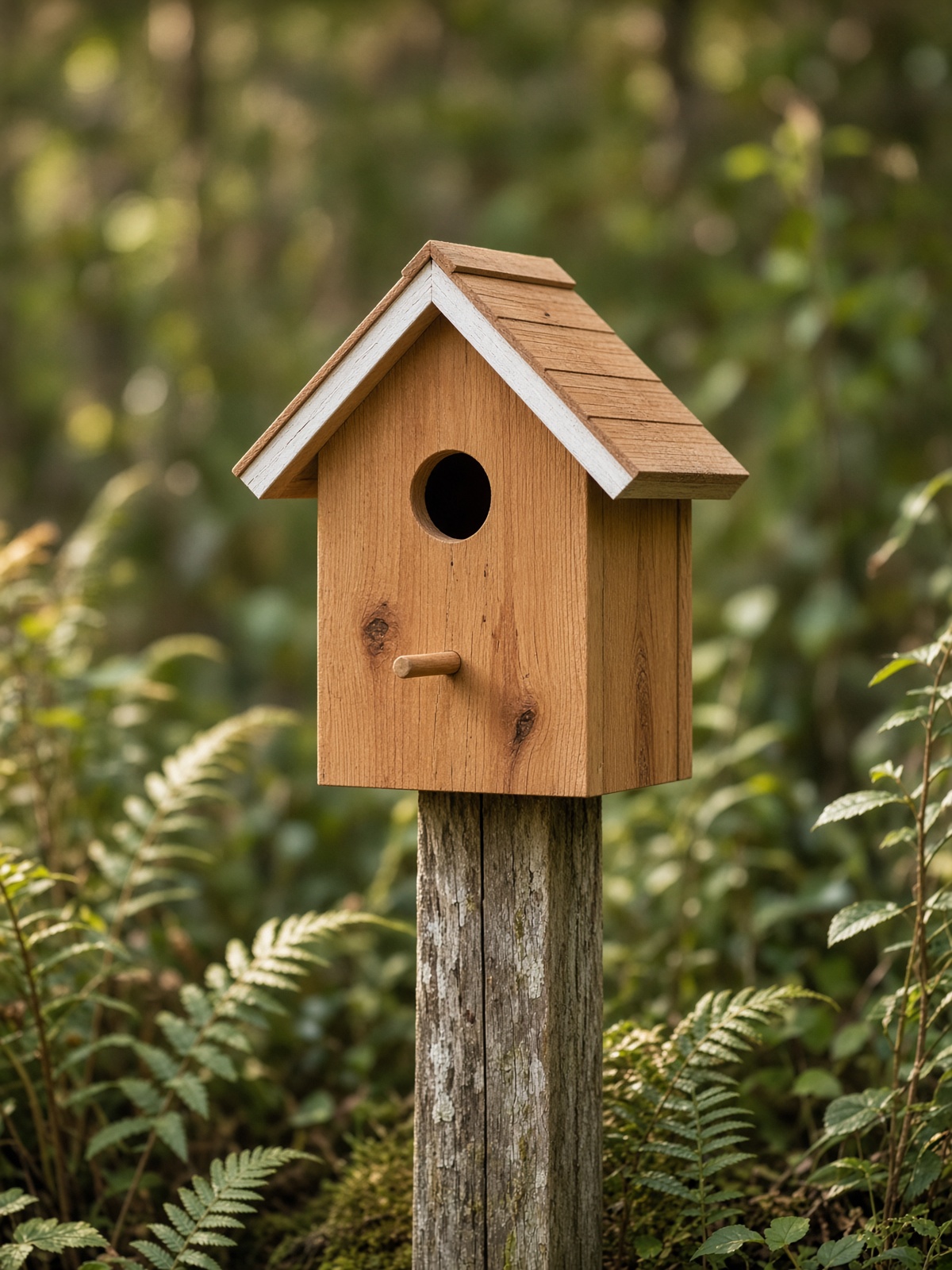
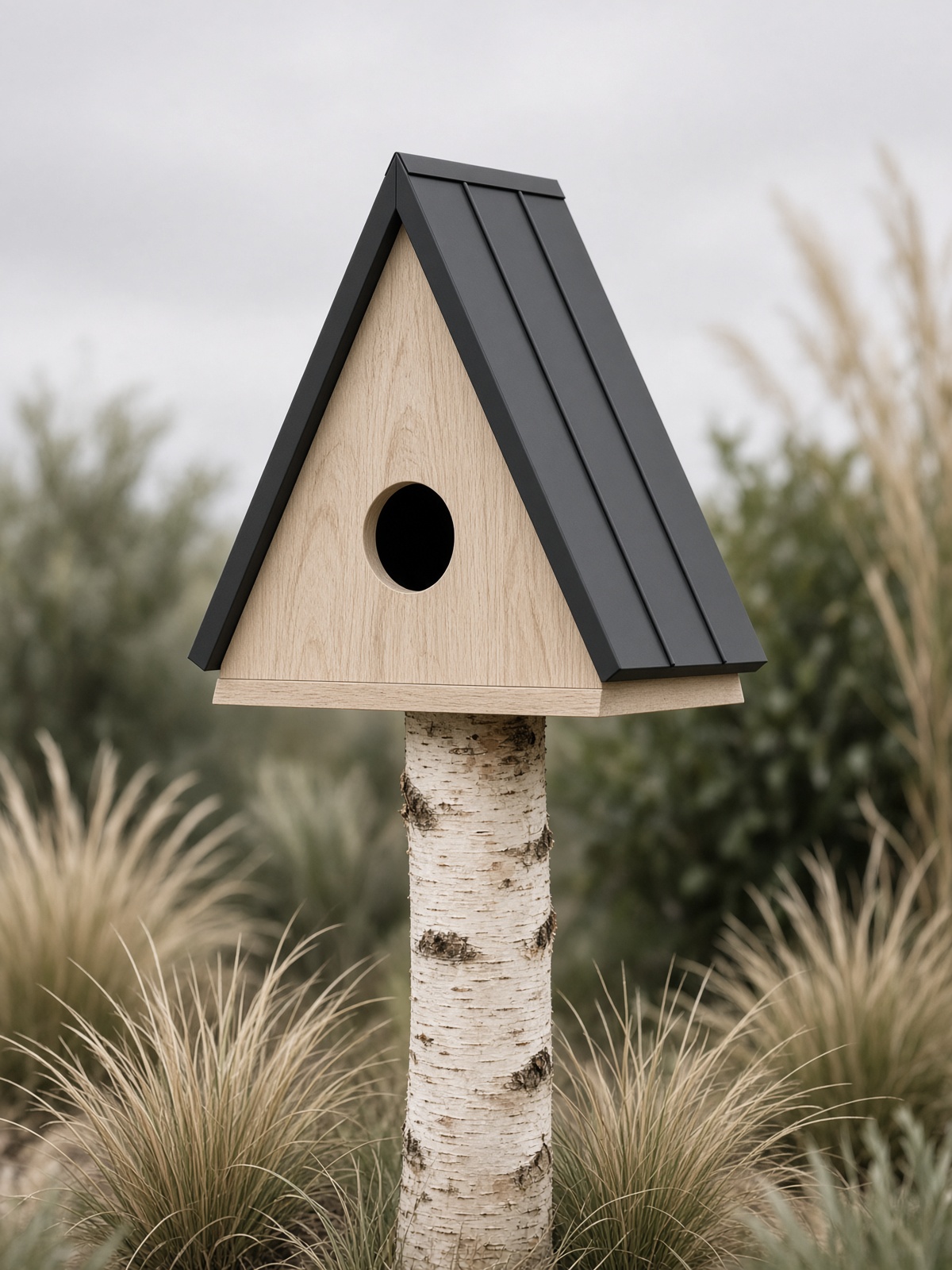
| House wren | 1⅛" | 5–10 ft | Shrubs, gardens, brush piles nearby | Wren Cottage, A-Frame, Cube Perch, The Hollow |
| Chickadee / nuthatch | 1⅛" | 6–15 ft | Wood edges, orchards | Wren Cottage, A-Frame, Finch Pavilion |
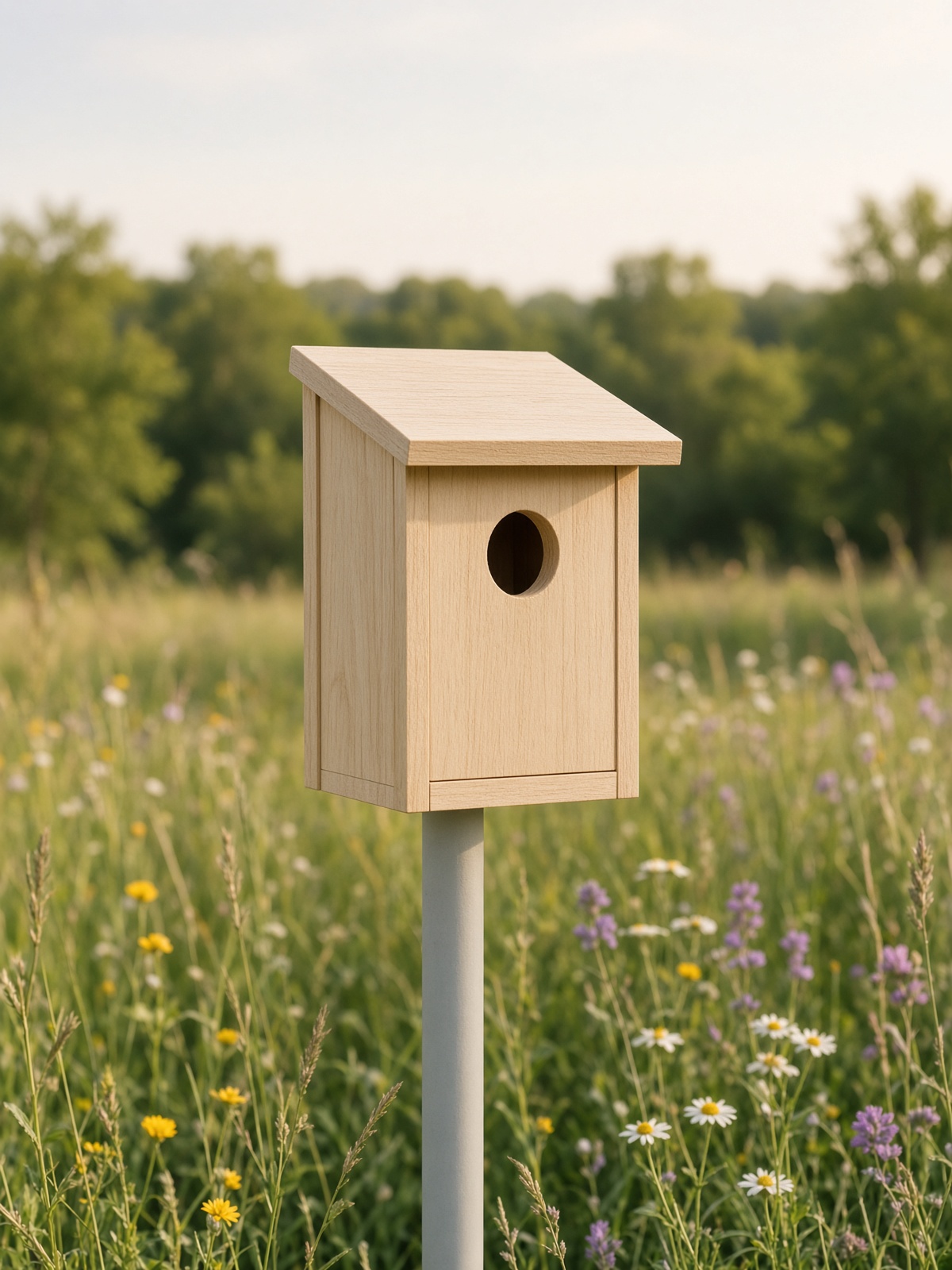
| Eastern bluebird | 1½" | 5–6 ft on a pole | Open grass, no dense woods at the hole | Bluebird Manor |
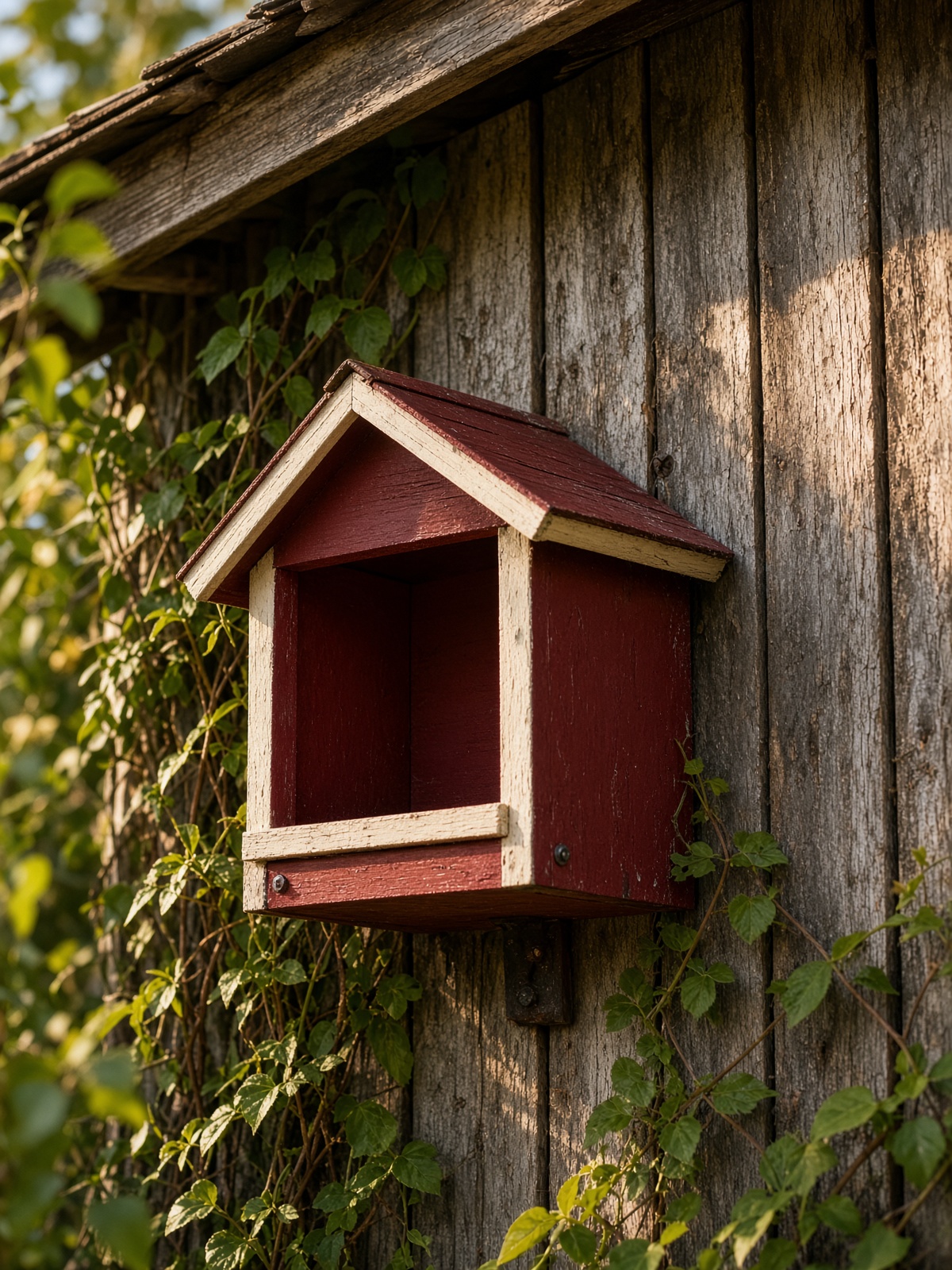
| Barn swallow / phoebe | Open shelf | 8–12 ft under an eave | Barns, porches, a clear flight path | Swallow Loft |
| House finch | 1¼" | Hanging, stable | Yards, orchards, not spinning in wind | Finch Pavilion |
| Screech-owl | 3" oval | 10–20 ft on a trunk | Woods meeting field | Screech Owl Box |
| Big brown bat | Bottom slot | 12–20 ft, full sun | Building wall or open pole — never the owl tree | The Colony, The Belfry |
Placement
- Face the entrance away from prevailing wind and hard afternoon sun. In the Northeast that is often east or southeast.
- Bluebirds want a pole in the open, with a baffle. Wrens will use a box in a shrub. Owls want a trunk at the wood edge.
- Leave a clear flight path. A hole buried in dense foliage is a predator’s gift.
- Bat houses want a dark finish and 6+ hours of sun on a wall or pole. Keep them fifty feet from the owl box — same yard is fine, same tree is not.
Cleaning
- Open the clean-out after the last brood, usually late summer or fall. Scrape the nest. Do not bleach the interior.
- Bluebirds often nest twice. Check weekly in season; remove old nests between broods.
- For the owl box, add a couple of inches of wood shavings before winter. Not sawdust — it packs and holds moisture.
- Wasps in the roof peak: scrape them out in the off-season. A smear of ivory soap on the ceiling discourages a rebuild.